BDI Self-Criticism: Managing Negative Self-Talk
Have you ever noticed a voice in your head that seems to highlight every mistake you make? This internal critic often speaks louder than any compliment you receive. For many people, this isn't just a bad habit; it is a core symptom of emotional distress. Do you feel like your own worst enemy lately? If so, you are not alone, and there are proven ways to understand and manage these thoughts.
Understanding the root of these feelings is the first step toward feeling better. One of the most respected tools for measuring these internal feelings is the Beck Depression Inventory (BDI). By using a Begin your confidential BDI self-assessment, you can start to see how much self-criticism is impacting your daily life. This article will explore why we criticize ourselves and how we can begin to turn down the volume of that negative inner voice.
By the end of this guide, you will have a better grasp of the science behind negative self-talk. You will also learn five practical, science-backed techniques to help you regain control. Your journey to a more compassionate self-view can start with a simple BDI assessment today.
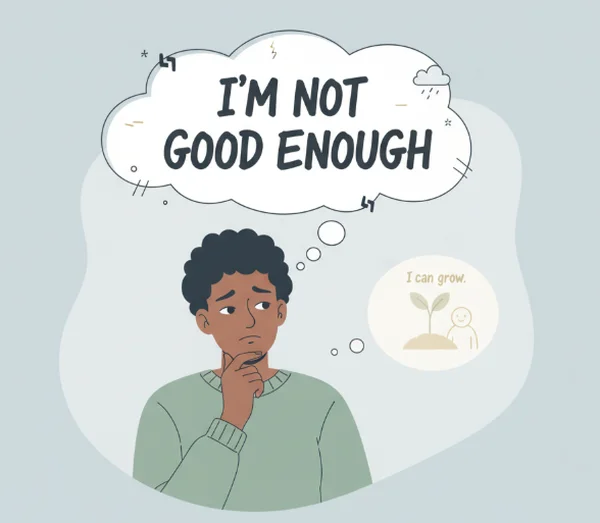
Understanding BDI's Self-Criticism Questions
The Beck Depression Inventory is more than just a list of questions about feeling "sad." It looks deeply at the cognitive, or "thinking," parts of depression. Self-criticism is one of the most important areas it measures. When you Begin your validated BDI screening, you will find questions that ask about your sense of failure, guilt, and how much you dislike yourself.
These questions help distinguish between a passing bad mood and a deeper pattern of negative thinking. The BDI looks at how you have felt over the last two weeks, including today. This timeframe helps create a clear picture of your current mental state. Specifically, it focuses on how you judge your own worth.
The Cognitive Triad in BDI's Self-Evaluation Items
The BDI is built on a concept called the "Cognitive Triad." This theory suggests that people with depression often have negative views in three areas: themselves, their world, and their future. The self-evaluation items in the BDI focus heavily on the first part of this triad—the negative view of the self.
The test gauges feelings of deficiency or unworthiness through questions about self-blame. Your responses reveal how harshly you judge yourself. This triad explains why BDI self-criticism is so powerful. It doesn't just stop at one mistake. It convinces you that you are fundamentally flawed, which then colors how you see your future and the world around you.
How Your BDI Self-Criticism Score Connects to Clinical Depression
Self-criticism isn't just a personality trait; it is often a clinical marker. High scores in the self-evaluation section of the BDI are frequently linked to more severe forms of depression. While everyone has a "bad day," clinical self-criticism is persistent and punishing.
High self-blame scores indicate a skewed internal filter. It may only highlight negatives, ignoring positives. This connection is why clinicians use the BDI to monitor progress. As someone begins to recover, their self-criticism scores are often the first things to improve.
How Accurate Is the BDI for Measuring Self-Criticism?
The BDI is widely considered the gold standard for identifying the cognitive symptoms of depression. Because it separates physical symptoms (like sleep or appetite) from cognitive ones (like self-blame), it provides a very accurate reflection of your "internal voice." Psychologists rely on these scores to determine if a person's self-talk has reached a level that requires clinical intervention.

The Science Behind Negative Self-Talk
Why do our brains generate such harsh thoughts? It might seem counterproductive, but there is a psychological and biological basis for this experience. Understanding this science can help take the "shame" out of the experience. It is not your fault that your brain has developed this pattern, but it is within your power to change it.
Beck's Cognitive Model and Negative Self-Perception
Dr. Aaron T. Beck, the BDI creator, revolutionized psychology. He focused on "automatic thoughts" that influence our emotions. His model suggests that emotions are not caused by events, but by how we interpret those events. If you drop a glass and think, "I'm so clumsy," your mood will drop lower than if you think, "That was an accident."
This model shows that negative self-perception is a learned habit of interpretation. Over time, these thoughts become so fast that we don't realize they are happening. They become our "truth." The BDI helps bring these hidden interpretations into the light so they can be challenged.
Why Self-Criticism Persists: Your Brain's Protective Alarm
From an evolutionary perspective, our brains are wired for survival, not necessarily for happiness. This is known as "negativity bias." In the past, it was more important to remember a dangerous predator than pretty flowers. Today, this bias manifests as a focus on our perceived failures.
Self-criticism is often an attempt to "fix" ourselves. We do this to avoid future social rejection. Unfortunately, your brain's protective alarm (the amygdala) can't tell the difference between a physical threat and a self-critical thought. This keeps us in a state of constant stress. Breaking this cycle requires conscious effort and the right tools, such as an online mood test.
5 Science-Backed Techniques to Reframe Negative Self-Talk
Knowing why we have these thoughts is helpful, but we also need practical ways to stop them. Reframing is the process of changing the way you look at a situation. Here are five techniques that have been proven to help people manage BDI self-criticism symptoms.
-
Name the Critic: Give your inner critic a name, like "The Judge." This helps you realize these thoughts are just "noise" and not your true self.
-
The Best Friend Test: Ask yourself: "Would I say this to a friend I love?" If the answer is no, it is too harsh for you, too.
-
Check the Evidence: Treat your thoughts like a court case. What is the actual evidence that you are a "failure"? What is the evidence against it?
-
Use "And" instead of "But": Instead of saying "I did a good job, but I made one mistake," try "I did a good job, and I have one area to improve."
-
Fact-Checking with Data: Use an objective tool. Sometimes we feel "worse" than we actually are. A concrete score can help you see your situation more clearly.
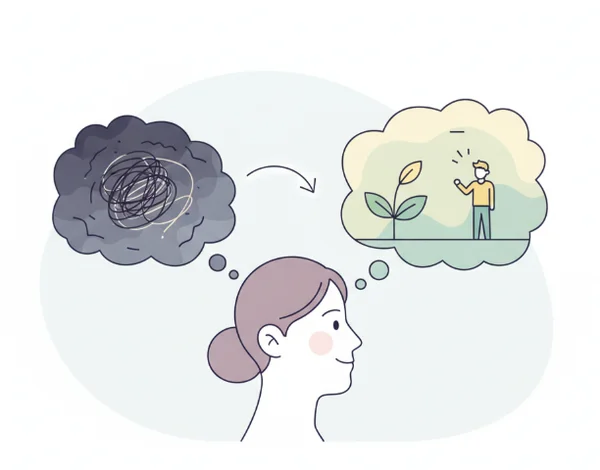
Cognitive Restructuring: Challenging Negative Thoughts
Cognitive restructuring is the "gold standard" technique in therapy. It involves identifying, challenging, and replacing irrational thoughts. When you notice a thought like "I can't do anything right," you stop and examine it. Is it 100% true? Have you ever done anything right?
By finding just one example of something you did correctly, you break the logic of the negative thought. This weakens the habit of self-criticism over time. It is like a muscle; the more you challenge these thoughts, the stronger your "healthy voice" becomes.
Self-Compassion Exercises for BDI Self-Criticism
Many people fear that being kind to themselves will make them lazy. Research shows the opposite is true. Self-compassion actually increases resilience. A simple exercise is the "Self-Compassion Break." When you feel criticized, place your hand over your heart and acknowledge your suffering. Say, "May I be kind to myself in this moment."
This physical and verbal act of kindness can lower your cortisol levels. It reminds the brain that you are safe. Mistakes are a universal human experience. If you are struggling, remember that your struggle is a legitimate health concern rather than a personal failing.
Behavioral Activation: Breaking the Self-Criticism Cycle
When we feel highly self-critical, we often withdraw from others. We stop doing things we enjoy. This gives us more time to sit with our negative thoughts. Behavioral activation is the practice of "doing" even when we don't "feel" like it.
By engaging in small tasks—like a 10-minute walk—you provide your brain with new, positive data. This creates a "positive feedback loop." Every small action is a vote against the inner critic.
When to Seek Professional Help for Self-Criticism
While self-help techniques are powerful, they are sometimes not enough on their own. It is important to know when self-criticism has crossed the line into something that requires professional support. You don't have to carry the burden of these thoughts by yourself.
Interpreting Your BDI Self-Criticism Results in Context
If you take a BDI test online and notice your score is in the "moderate" or "severe" range, it is time to talk to a professional. A high score on the BDI is a signal, like a "check engine" light in a car. It doesn't mean you are broken, but it does mean you need an expert to help you tune things up.
Professional therapists help you understand the deeper origins of your self-criticism. Sometimes these thoughts go back to childhood. Understanding the "why" with a professional can make the "how" of healing much faster.
Therapy Options That Specifically Target Negative Self-Talk
Several types of therapy are designed specifically to handle managing negative self-talk. Cognitive Behavioral Therapy (CBT) is the most common. Other options like Acceptance and Commitment Therapy (ACT) or Compassion-Focused Therapy (CFT) are also excellent.
CFT was developed for people who feel high levels of shame and self-attack. It helps patients develop an "inner caregiver" to balance the "inner critic." If your BDI results show persistent self-dislike, asking a doctor about these therapy types can be a life-changing step.
Self-criticism can feel overwhelming, but with these tools, you can start reclaiming your inner voice. By understanding that these thoughts are often a symptom of biological bias, you can stop blaming yourself for having them. Using tools like the BDI allows you to measure your progress and see the reality of your mood.
Healing isn't about silencing your inner critic overnight—it's about learning to reply with kindness when it speaks up. Small steps, like practicing self-compassion or doing a quick mood check, add up over time to create a much brighter mental outlook.
If you are ready to take that first step toward understanding your inner critic, we invite you to start your free test now. Knowledge is power, and knowing your BDI score is the first step toward a quieter, kinder mind.
The Takeaway
What does a high self-criticism score on the BDI test indicate?
A high score in the self-evaluation items of the BDI typically indicates a strong presence of negative cognitive distortions. It suggests that you may be viewing yourself through an unfairly negative lens. This is a core symptom of depression.
Can cognitive restructuring really change long-standing negative self-talk?
Yes, research consistently shows that cognitive restructuring is highly effective. The brain has "neuroplasticity," meaning it can form new pathways. By consistently challenging negative thoughts and replacing them with balanced ones, you actually rewire your brain to think more realistically.
How do I know if my self-criticism is clinically significant?
Self-criticism becomes clinically significant when it interferes with your ability to work, maintain relationships, or enjoy life. If your thoughts lead to feelings of hopelessness, they are likely more than just "standard" self-improvement thoughts. Taking a validated BDI test provides a standardized way to measure this significance.
Are there specific BDI questions that measure self-blame?
Yes, the BDI includes 21 items, several of which focus specifically on internalizing blame. These questions ask about your sense of being punished, your disappointment in yourself, and your tendency to blame yourself for everything that goes wrong. You can access the test for free on our platform to see your specific breakdown.