BDI Test for Students: Academic Stress vs. Depression
Are the late-night study sessions, looming deadlines, and pressure to succeed making you feel overwhelmed? As a student, it's normal to experience stress. But what happens when that stress starts to feel like something more? Is it just academic burnout, or could it be depression?
College and university life come with unique pressures. This article will help you understand the crucial difference between academic stress and clinical depression. We'll show you how to interpret your feelings in the context of your studies and how a reliable tool like the BDI test can offer clarity. The Beck Depression Inventory (BDI) is a scientifically validated method for self-assessment, and you can start your test for free to gain valuable insight into your emotional state.

How Academic Pressure Affects Your Mental Health
The life of a student is often a balancing act. Juggling classes, assignments, exams, and a social life can take a toll on anyone's mental well-being. Academic pressure is a significant stressor that can manifest as anxiety, irritability, and exhaustion. While some stress can be motivating, chronic or overwhelming pressure can negatively impact your mental health, blurring the lines between typical student struggles and more serious conditions like depression.
It's important to recognize that your feelings are valid. The intense environment of higher education can sometimes make it difficult to step back and assess your own mental state objectively. Understanding how this pressure works is the first step toward managing it effectively and knowing when to seek support.
Recognizing the Difference Between Burnout and Clinical Depression
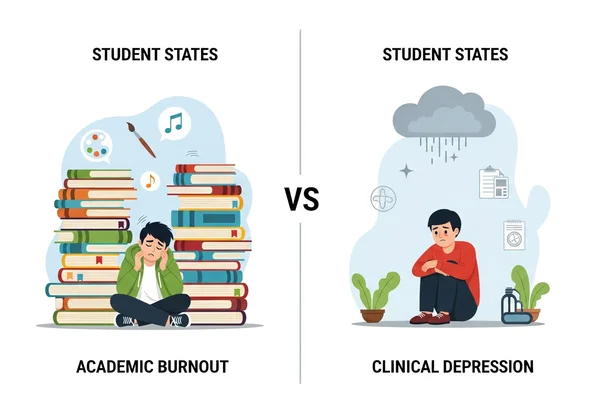
Burnout and depression can feel very similar. Both can leave you feeling exhausted, cynical, and detached. However, there are key distinctions. Academic burnout is often directly tied to your schoolwork. You might feel a lack of motivation for your studies, but you can still find joy in other activities, like hobbies or spending time with friends. With burnout, these feelings may improve with a break, like a holiday or a long weekend.
Clinical depression, on the other hand, is more pervasive. It affects all areas of your life, not just your academics. A key symptom is anhedonia—the loss of pleasure in activities you once enjoyed. Unlike burnout, depression doesn't typically go away with a short break. It's a persistent low mood accompanied by other symptoms like changes in sleep or appetite, feelings of worthlessness, and difficulty concentrating on anything, not just schoolwork. A tool like the BDI test can help identify these broader patterns.
Why Your BDI Test Results May Fluctuate During Exam Periods
Have you ever noticed your mood dips significantly during midterms or finals? This is a common experience. The BDI test measures your feelings over the past week. During intense academic periods, it's natural for scores to be higher. A temporarily elevated score might reflect situational stress rather than an underlying depressive disorder.
For example, a lack of sleep due to studying or feeling pessimistic about an upcoming exam can influence your answers. This is why context is so important. A single high score during finals week isn't necessarily a cause for alarm, but it is a signal to prioritize self-care. However, if your score remains high even after exams are over, it could indicate a more persistent issue. Tracking your score over time can provide a clearer picture of your mental health baseline. You can always take a free test to check in with yourself at different points in the semester.
Understanding Your BDI Test Results in a Student Context
After completing the 21 questions on the BDI test, you will receive a score. This score is a valuable piece of data, but it’s not a diagnosis. It’s a snapshot of your emotional state. For a student, interpreting this score requires looking at it through the lens of your academic life. Is your score high because of a specific, temporary stressor, or does it reflect a more consistent feeling of sadness and hopelessness?
Understanding what your BDI score means in your daily life is crucial. This helps you move from thinking 'I have a score of 25' to understanding 'My score is in the moderate range, and it might relate to my struggles with coursework and social isolation.' This shift empowers you to take meaningful action. You can learn more about interpreting BDI scores to gain deeper insights.
BDI Score Ranges: What They Mean for Campus Life
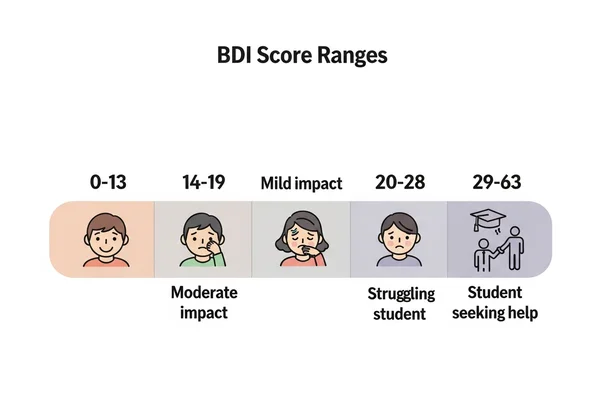
The BDI score is typically categorized into ranges indicating different levels of depressive symptoms. Here’s a general guide to what these might mean for you as a student:
- 0-13 (Minimal Depression): You may be experiencing the normal ups and downs of student life. Your mood is generally stable, though you might have occasional bad days.
- 14-19 (Mild Depression): You might be feeling consistently down, struggling with motivation for classes, or finding it harder to enjoy social events. This could be a sign of prolonged stress or the early stages of depression.
- 20-28 (Moderate Depression): At this level, symptoms are likely interfering with your academic performance and daily functioning. You may have trouble concentrating in lectures, completing assignments, or even getting out of bed. It is highly recommended to seek support.
- 29-63 (Severe Depression): These scores indicate significant distress that severely impacts your ability to function. It is crucial to seek professional help immediately from your campus counseling center or another mental health provider.
Remember, these are just guidelines. The most important thing is how you feel. A "mild" score can still be very distressing and warrants attention. Gaining this insight is a powerful first step, and you can get your score right now by completing the free BDI test.
Persistent High Scores: When to Seek Professional Help
A single BDI test provides a snapshot. Repeating the test at different times—for instance, during a quiet week versus finals week—can reveal important patterns. If you consistently score in the moderate to severe range, even when academic pressures are lower, it is a strong indicator that you should seek professional help.
Persistent high scores suggest that what you're experiencing is likely more than just stress. Don't wait for things to get worse. Reaching out is a sign of strength. Your campus counseling center, a psychologist, or a doctor can provide a formal diagnosis and discuss treatment options. Your BDI results can be an excellent starting point for that conversation, giving them concrete information to begin with.
Strategies for Managing Academic-Related Mental Health
Understanding your mental state is the first step; taking action is the next. As a student, you have access to a unique ecosystem of resources and can develop strategies tailored to your academic life. Managing stress and protecting your mental health is as crucial as studying for exams.
Empowering yourself with practical techniques can help reduce anxiety, improve focus, and build resilience. Whether it’s changing your study habits or connecting with others, small changes can make a big difference in your overall well-being.
Evidence-Based Study Techniques to Reduce Test Anxiety
Test anxiety is more than just nerves; it can be paralyzing. Instead of simply studying harder, try studying smarter with techniques proven to reduce stress:
- The Pomodoro Technique: Study in focused 25-minute intervals, followed by a 5-minute break. This prevents burnout and improves concentration.
- Active Recall and Spaced Repetition: Instead of passively re-reading notes, actively test yourself. Spacing out your study sessions over time is more effective for long-term memory and reduces last-minute cramming.
- Mindfulness and Deep Breathing: Before an exam or study session, take five minutes to practice deep breathing. This calms your nervous system and reduces the physical symptoms of anxiety.
Building Your Campus Mental Health Support Network
You are not alone. Your campus is filled with resources designed to support you. Building a support network is a proactive step toward managing your mental health. Explore our resources for student mental health for additional guidance.
- Campus Counseling Services: Most universities offer free or low-cost counseling services. These professionals are trained to help students with academic stress, depression, and anxiety.
- Academic Advisors: Your advisor can help you manage your course load, discuss extensions if needed, and connect you with academic support services like tutoring.
- Peer Support Groups: Many campuses have student-run groups for mental health. Sharing your experiences with peers who understand can be incredibly validating and helpful.
- Friends and Family: Don't underestimate the power of talking to people you trust. Let them know what you're going through.
Your BDI test results can be a private tool for self-reflection or a conversation starter with someone in your support network.

Your Next Steps After Taking the Student BDI Test
Navigating the pressures of student life is tough, and it's easy to dismiss your feelings as "just stress." However, understanding the difference between academic burnout and depression is vital for your long-term well-being. The BDI test serves as a confidential, scientifically-backed starting point for this crucial self-assessment.
Here's what to keep in mind as you navigate your mental health journey:
- Context is crucial: Your feelings and BDI score can fluctuate with academic demands.
- Burnout and depression are different: While burnout is often tied to work, depression affects all aspects of your life.
- Persistent high scores are a clear signal: If your mood doesn't improve after a stressful period, it's time to seek professional support.
Your mental wellbeing deserves the same attention and care as your academic goals. Taking a few minutes to understand where you stand is a powerful act of self-care. Ready to gain clarity? Take the first step on your journey to better understanding your emotional health. Try the free BDI test today.
The Takeaway
Can the BDI test accurately identify depression in university students?
The BDI test is a highly reliable screening tool for identifying depressive symptoms in adults, including university students. While it cannot provide a formal diagnosis—only a qualified healthcare professional can do that—it accurately measures the severity of common symptoms. For students, it's an excellent way to gauge whether their feelings of stress are crossing the line into something that may require professional attention.
How should I time my BDI test around academic deadlines?
For the most balanced view of your mental health, consider taking the test during a "typical" week, not at the peak of midterms or finals. This will give you a baseline score. You could then take it again during a high-stress period to see how much your mood is affected by academic pressure. This comparison can provide valuable insight. If you're concerned right now, however, don't wait. You can take the assessment anytime.
What's a typical BDI score for students experiencing academic stress?
There isn't a single "typical" score, as everyone's experience is different. It is common for students to see their scores enter the "mild" range (14-19) during stressful academic periods. The key is whether the score returns to a lower level after the stressor passes. If your score is persistently in the moderate-to-severe range, it's a strong sign to seek further support, regardless of deadlines.
How do I discuss my BDI results with my campus counseling center?
Bringing your BDI score to a counselor is a great way to start a productive conversation. You can say something like, "I took this online depression screening test and my score was [your score], which falls into the [e.g., moderate] range. I've been feeling [describe your symptoms], and I'd like to talk about it." This gives the counselor a concrete starting point and shows that you've already taken a proactive step. You can get your score by using our free online BDI test.
Where can I find more information about depression resources for students?
For comprehensive resources on depression and mental health support, visit our student mental health guide.