Different Types of Depression: Symptoms, Patterns, and What They Mean
Searching for the different types of depression can be confusing because people use several naming systems at once. Some names describe a clinical category, such as major depressive disorder or persistent depressive disorder. Others describe timing, such as seasonal or postpartum depression. Still others describe severity, symptom features, or the way low mood overlaps with anxiety, sleep, energy, or concentration. This guide explains the most common depression names in plain English, without asking you to label yourself. If you are trying to make sense of recent mood changes, a private BDI self-assessment can be one educational starting point, but it should sit alongside personal context and professional support when symptoms feel intense, persistent, or unsafe.
What People Mean by Different Types of Depression
Depression is not one single experience. It can affect mood, body, thinking, sleep, appetite, motivation, relationships, and the ability to enjoy ordinary activities. A type name is a way to organize patterns, not a verdict about a person. Two people may both hear the phrase "major depression" and still have very different daily experiences.
It also helps to separate three ideas that are often mixed together:
- Type: the broader pattern, timing, or category, such as major, persistent, seasonal, or perinatal depression.
- Severity: how much symptoms interfere with daily life, often described as mild, moderate, or severe.
- Features: extra patterns that may appear with depression, such as anxious distress, mixed mood features, psychosis symptoms, or changes in sleep and appetite.
This is why lists of "7 types" or "10 types" rarely match perfectly. Some focus on depressive disorders. Others include bipolar depression, grief-related depression, atypical features, or treatment-resistant depression. The useful question is: "Which pattern helps me describe what is happening and decide what support to seek?"
A Practical List of Different Types of Depression
Below is a plain-language overview of common names. The goal is orientation, not self-labeling.
Major depressive disorder
Major depressive disorder, often called clinical depression, usually refers to low mood or loss of interest lasting at least two weeks and affecting daily functioning. Other symptoms may include sleep changes, appetite changes, fatigue, worthlessness, difficulty concentrating, slowed movement or restlessness, and thoughts about death or self-harm.
People searching for different types of major depressive disorder may also see specifiers such as "with anxious distress," "with mixed features," "with melancholic features," or "with psychotic features." These details matter because the same broad condition can look different from one person to another.
Persistent depressive disorder
Persistent depressive disorder describes a longer-lasting pattern of depressed mood. Symptoms may be less intense than an acute major depressive episode, but they can last for years and still make life feel narrow, effortful, or emotionally flat. Some people with persistent depression also experience periods when symptoms become more intense.
Seasonal affective disorder
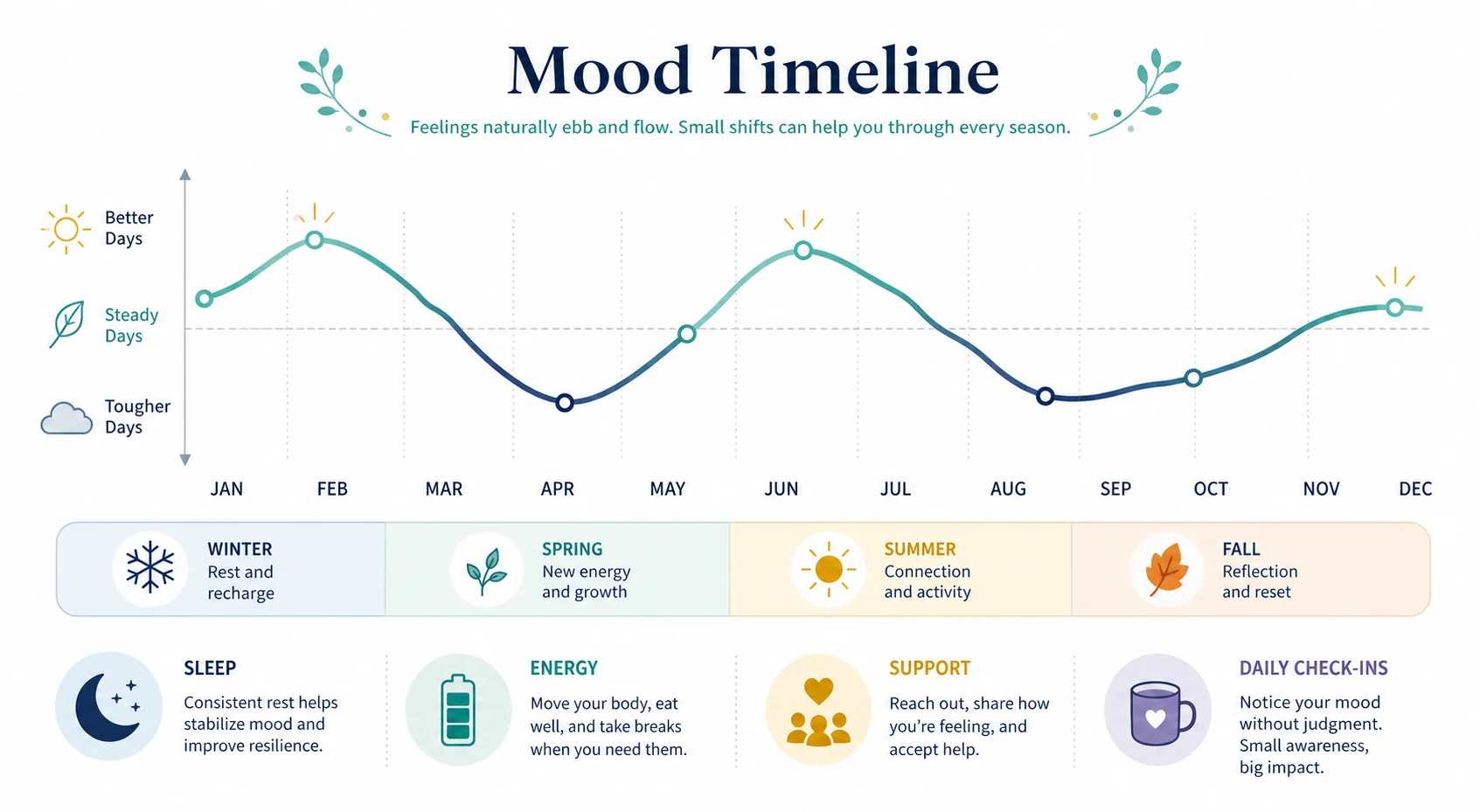
Seasonal affective disorder refers to depression that follows a seasonal pattern, most commonly starting in late fall or winter and improving in spring or summer. It may involve low energy, sleeping more than usual, appetite changes, and social withdrawal. Seasonal patterns are worth noting because timing can guide a more useful conversation with a clinician.
Perinatal and postpartum depression
Depression can occur during pregnancy or after childbirth. People often use "postpartum depression" for symptoms after birth, while "perinatal depression" can include pregnancy and the months after delivery. This is different from short-lived mood shifts that many parents experience after birth. When symptoms are strong, prolonged, or interfere with bonding, sleep, safety, or daily care, professional support is important.
Premenstrual dysphoric disorder
Premenstrual dysphoric disorder, or PMDD, involves severe mood symptoms tied to the menstrual cycle. Tracking timing across cycles can help show whether symptoms follow a repeated pattern.
Depression with anxiety symptoms
Depression and anxiety often overlap. Someone may feel slowed down and exhausted while also feeling tense, worried, restless, or on edge. The full symptom picture matters because support may need to consider both low mood and anxious arousal.
Bipolar depression
Bipolar depression refers to depressive episodes that occur as part of bipolar disorder. This is especially important because a history of mania or hypomania changes how clinicians think about care. Signs that deserve discussion include periods of unusually elevated or irritable mood, much less need for sleep, racing thoughts, impulsive risk-taking, or unusually high energy. If that history exists, it is worth mentioning even if the current problem feels like depression.
Depression related to substances, medication, or health conditions
Some depressive symptoms can be influenced by substance use, withdrawal, medications, hormonal changes, thyroid problems, chronic pain, sleep disorders, neurological conditions, or other health issues. Questionnaires can show symptom burden, while a trained professional can consider the broader context.
Type Is Different From Severity
Many searchers ask, "How severe is my depression?" That is a different question from "What type is it?" Type describes the pattern. Severity describes impact.
Mild symptoms may still matter if they are new, persistent, or unlike your usual self. Moderate symptoms may make work, study, relationships, or self-care much harder. Severe symptoms may involve major impairment, intense hopelessness, inability to function, psychosis symptoms, or thoughts of self-harm. If you feel at risk of harming yourself or someone else, contact emergency services or a crisis line in your area right away.
Severity can change over time. A person may have a seasonal pattern that is mild one year and more disruptive the next. That is why it helps to track duration, intensity, and daily impact instead of relying on a single label.
Common Symptoms Across Different Types of Depression
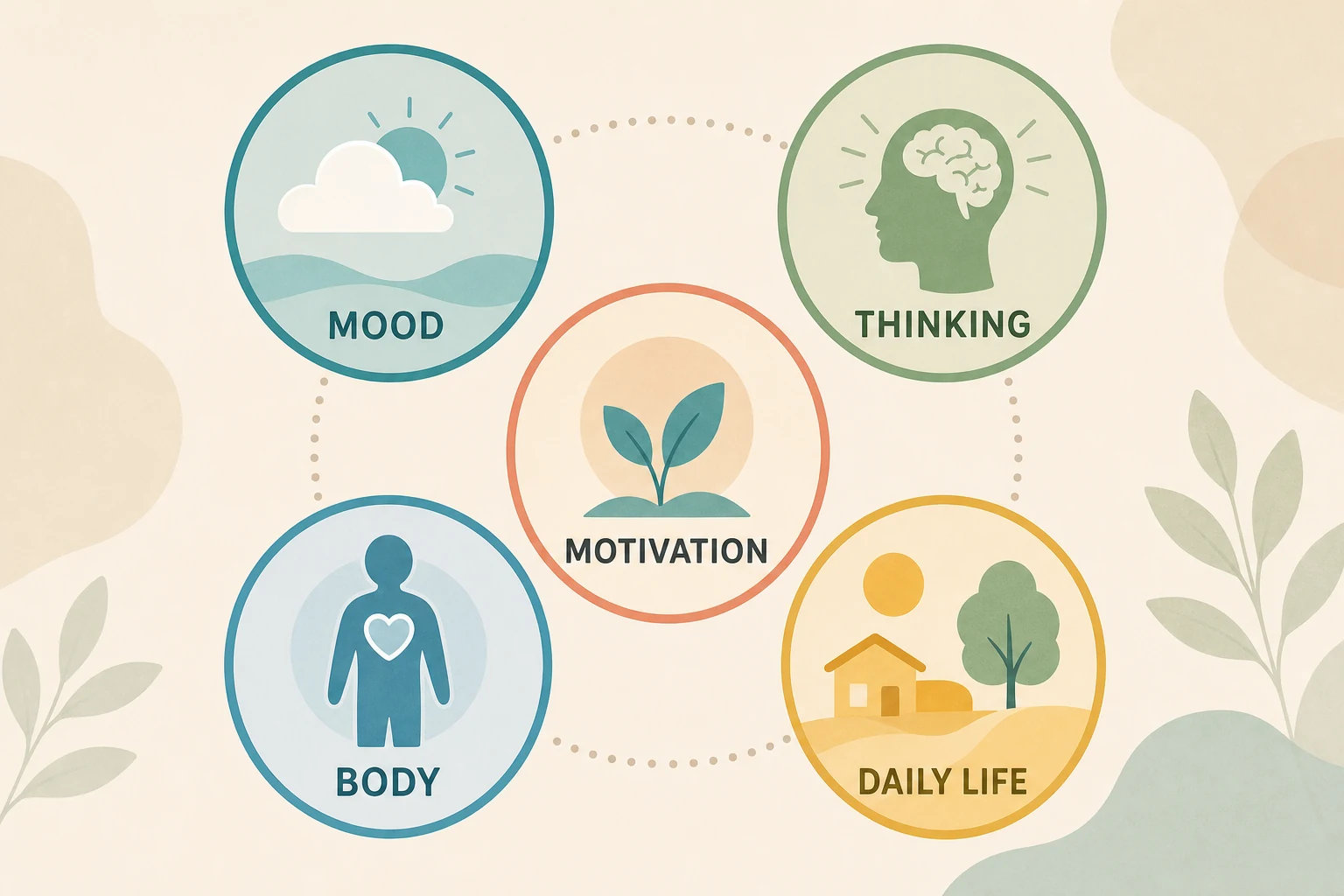
Different depression names can share many symptoms. A practical way to think about them is by cluster:
- Mood symptoms: sadness, emptiness, irritability, hopelessness, guilt, or emotional numbness.
- Interest and motivation symptoms: losing pleasure, avoiding activities, social withdrawal, or feeling unable to begin ordinary tasks.
- Thinking symptoms: poor concentration, indecision, negative self-talk, slowed thinking, or thoughts about death.
- Body symptoms: fatigue, sleep changes, appetite or weight changes, restlessness, slowed movement, aches, or low sexual interest.
- Functioning changes: missing school or work, falling behind on responsibilities, neglecting hygiene, or pulling away from people.
Not everyone experiences all of these. Some people mainly notice body symptoms. Others notice anger, numbness, or brain fog before sadness. Teens may show more irritability. Older adults may describe fatigue, pain, sleep trouble, or memory concerns. The pattern matters because it gives you better language for a support conversation.
Why Depression May Not Go Away Quickly
"Why does my depression not go away?" is a common and understandable question. The answer is rarely simple. Symptoms may continue because of ongoing stress, grief, trauma, isolation, sleep disruption, chronic illness, substance use, hormonal shifts, medication effects, or an underlying mood pattern that needs more support than self-care alone.
Sometimes people wait because their symptoms feel "not bad enough." Sometimes they assume functioning means they are fine. But functioning and wellness are not the same. If daily life keeps requiring more effort than it used to, or if you keep losing interest in things that once mattered, that information is worth taking seriously.
It can help to note:
- When symptoms began and whether they came on suddenly or gradually.
- Whether symptoms are constant, episodic, seasonal, cycle-related, or linked to stressors.
- What has changed in sleep, appetite, energy, concentration, and social connection.
- What support, routines, or treatments have helped even a little.
This kind of record does not replace care. It simply makes the conversation clearer.
How a Self-Assessment Fits Into the Picture
Screening tools can help you organize what you are noticing. The Beck Depression Inventory asks about common depressive symptoms and produces a score that reflects symptom severity at a point in time. A score can be useful when you want a structured snapshot before speaking with a professional, comparing changes over time, or putting vague feelings into words.
Still, a questionnaire cannot account for everything: medical history, substances, medications, grief, culture, safety concerns, bipolar history, or the reason symptoms began. Use BDI-based mood screening as educational information, not as a final answer. If your results concern you, or if symptoms are persistent, intense, or interfering with daily life, consider sharing the pattern with a doctor, therapist, counselor, or another qualified mental health professional.
When to Seek Support
Consider reaching out for professional support when symptoms last most days for two weeks or longer, return repeatedly, disrupt work or school, affect relationships, make self-care difficult, or include thoughts of self-harm. It is also wise to seek support when depression appears after childbirth, follows a seasonal pattern that keeps recurring, overlaps with substance use, or appears alongside periods of unusually high energy or reduced sleep.
Support does not have to mean you know exactly what to say. You can begin with a simple sentence: "My mood, energy, and daily functioning have changed, and I would like help understanding what is going on." Bringing notes about timing, symptoms, severity, and any self-assessment results can make that first conversation easier.

Using Type Names as a Starting Point
The different types of depression are best understood as maps, not boxes. Major depression, persistent depression, seasonal patterns, perinatal depression, PMDD, bipolar depression, and depression linked with health or substance factors all point to different questions a clinician may ask. They also give you a more precise way to describe your experience.
If you are unsure where to begin, notice the basics first: duration, timing, severity, symptom clusters, and safety. A free depression self-check tool can help you reflect on current symptoms in a structured way, while a qualified professional can help interpret the bigger picture. You deserve support that treats your experience as real, specific, and changeable, even when the name for it is not obvious yet.
FAQ
What are the 7 types of depression?
There is no single universal list of exactly seven. A practical list often includes major depressive disorder, persistent depressive disorder, seasonal affective disorder, postpartum or perinatal depression, PMDD, bipolar depression, and depression related to substances, medications, or medical conditions. Some lists also include psychotic depression, atypical features, or depression with anxiety symptoms.
What are the 12 signs of depression?
Common signs include low mood, loss of interest, fatigue, sleep changes, appetite or weight changes, poor concentration, guilt or worthlessness, irritability, slowed movement, restlessness, social withdrawal, and thoughts about death or self-harm. A person does not need every sign for symptoms to matter.
How many different types of depression are there?
It depends on how the list is organized. Formal clinical categories, symptom specifiers, life-stage patterns, seasonal patterns, and severity levels can all be counted differently. For everyday understanding, it is usually more helpful to describe the pattern clearly than to memorize a fixed number.
How severe is my depression?
Severity depends on intensity, duration, safety, and how much symptoms interfere with daily life. Screening scores can offer a structured snapshot, but they do not capture the whole context. If symptoms feel severe, persistent, or unsafe, seek professional or crisis support promptly.
Why does my depression not go away?
Depression may persist for many reasons, including chronic stress, sleep disruption, grief, trauma, health problems, substance use, hormonal changes, isolation, or an underlying mood disorder pattern. If symptoms keep returning or do not improve, a professional evaluation can help identify next steps.
Can different types of depression overlap?
Yes. Someone may have persistent depressive disorder and later experience a more intense depressive episode. Depression may also overlap with anxiety, seasonal changes, medical conditions, or bipolar mood episodes. Overlap is one reason a full history matters.
Is bipolar depression the same as major depression?
No. The depressive symptoms can look similar, but bipolar depression occurs within bipolar disorder, which also involves manic or hypomanic episodes. A history of unusually high energy, reduced need for sleep, racing thoughts, or risky behavior is important to mention to a clinician.