SIG E CAPS Meaning and the Depression Mnemonic Explained
SIG E CAPS is a memory aid for the symptom areas clinicians often review when they are considering major depression: sleep, interest, guilt, energy, concentration, appetite, psychomotor change, and suicidal thoughts. People also write it as SIGECAPS, sige caps, or sig e caps, but the idea is the same. It is not a pill, a prescription instruction, a score, or an online result by itself.
If you found this term while searching "am I depressed" or comparing a depression screening test with a symptom list, treat it as a map for reflection, not a verdict. A private free BDI self-assessment can help you organize how symptoms feel over the past two weeks, while SIG E CAPS can help you understand what those symptom areas mean in plain English.
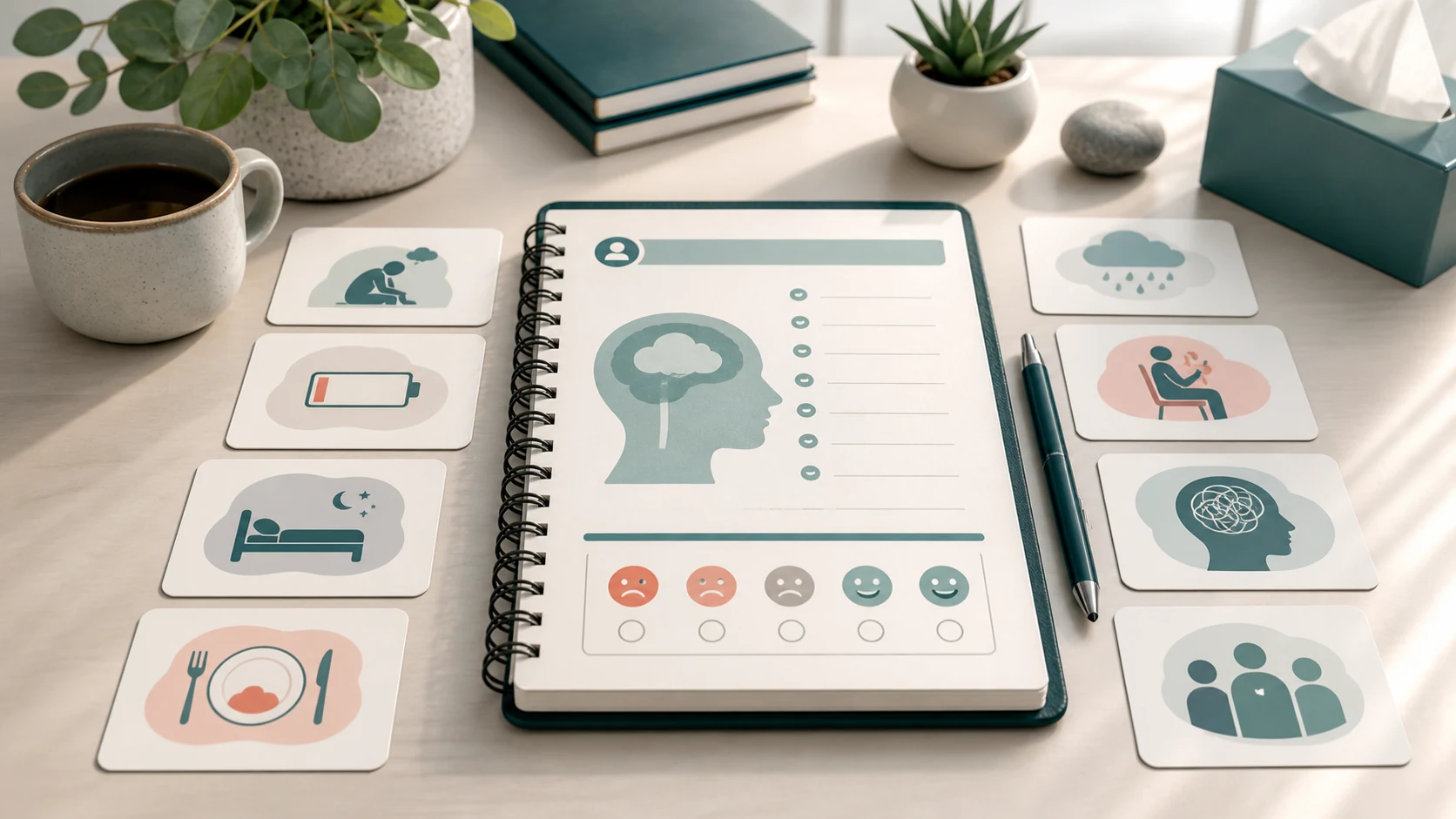
What Does SIG E CAPS Mean?
SIG E CAPS stands for:
- Sleep changes
- Interest loss
- Guilt or worthlessness
- Energy loss
- Concentration problems
- Appetite or weight change
- Psychomotor agitation or slowing
- Suicidal thoughts
The phrase is a mnemonic, meaning it helps people remember a longer list. In mental health training, it is used to keep a conversation from missing important symptom domains. It closely overlaps with major depression criteria, but it does not replace a full clinical assessment. A professional still considers duration, distress, impairment, medical causes, substances, grief, bipolar-spectrum symptoms, and the person's broader life context.
One confusing point is the wording. "Sig" is also used in prescriptions to mean directions for use, and "E caps" can sound like "energy capsules." That history is why people ask, "What are sig e caps in prescriptions?" In this depression context, SIG E CAPS is not medication and does not "work" after a certain number of hours or days. It is simply a way to remember symptom categories.
How Many SIG E CAPS for Depression?
A common teaching shortcut is that a major depressive episode involves five or more symptom areas during the same two-week period, and at least one must be depressed mood or loss of interest or pleasure. SIG E CAPS includes interest and seven other areas; depressed mood is usually asked separately. That is why some clinicians say "mood plus SIG E CAPS" rather than treating the eight letters as the entire framework.
For a layperson, the safer question is not "How many do I need?" It is "Which changes have been present, how often, for how long, and how much are they affecting daily life?" Two people can mark similar symptom areas and still need different next steps. Sleep loss from a newborn, appetite change from a medical illness, slowed movement from medication, and concentration trouble from acute stress can look similar on paper but mean different things.
If suicidal thoughts or thoughts of self-harm are present, that deserves immediate human support. Contact local emergency services, a crisis line, or a trusted professional. A mnemonic is not enough support for that moment.
SIGECAPS Letter by Letter
S for Sleep
Sleep can move in either direction. Some people cannot fall asleep, wake early, or stay awake for long stretches at night. Others sleep much more than usual and still feel tired. The useful detail is the pattern: when it started, how often it happens, whether it is new for you, and whether it changes your functioning during the day.
I for Interest
Interest refers to reduced pleasure or loss of interest in activities that used to matter. This can include hobbies, social plans, sex, exercise, work, study, faith practices, or simple daily routines. A good self-check is specific: "What did I usually enjoy, and what has changed?" This is often more useful than only asking whether you feel sad.
G for Guilt
Guilt in this context means persistent guilt, worthlessness, or harsh self-blame that feels excessive or difficult to shake. It is different from ordinary remorse after hurting someone or making a mistake. It may show up as "I ruin everything," "I am a burden," or "Nothing I do counts," even when other people see the situation differently.
E for Energy
Energy loss can feel physical, mental, or both. People may describe heaviness, fatigue, trouble starting tasks, or needing much more effort for normal responsibilities. Because low energy can also come from sleep problems, anemia, thyroid issues, infections, burnout, pain, medication effects, or substance use, it is a symptom area to discuss carefully rather than interpret alone.
C for Concentration
Concentration problems can include trouble reading, following conversations, finishing work, studying, remembering details, or making decisions. In search data, this often appears as depression questionnaire wording or "depression questions." The practical issue is whether attention has changed from your baseline and whether it is interfering with normal routines.
A for Appetite
Appetite may decrease or increase. Some people lose interest in food and unintentionally lose weight. Others eat more often or crave certain foods. The key detail is change: amount, frequency, weight change, and whether eating has become tied to numbness, anxiety, or a sense of losing control.
P for Psychomotor Changes
Psychomotor activity means visible changes in movement or speech. Psychomotor slowing can look like speaking more slowly, moving less, taking longer to answer, or seeming physically slowed down. Psychomotor agitation can look like pacing, fidgeting, hand-wringing, or feeling unable to sit still. This is one reason searches like "sigecaps psychomotor activity" appear: the word sounds technical, but it simply points to movement and behavior that others may notice.
S for Suicidal Thoughts
The final S refers to thoughts of death, self-harm, or suicide. This symptom area should never be minimized or handled only through self-scoring. If it applies to you or someone near you, involve another person quickly: emergency services, a crisis line, a clinician, or a trusted support person. If you are reading for general education, remember that asking about safety is part of care, not a sign that someone has done anything wrong.
SIG E CAPS vs DIGFAST
DIGFAST is another psychiatry mnemonic, but it is used for mania or hypomania, not depression. It usually points to distractibility, indiscretion or risky activity, grandiosity, flight of ideas, activity increase or agitation, sleep need decrease, and talkativeness. People search "digfast sigecaps" because the two are often taught together.
The distinction matters. Depression-focused screening should not ignore periods of unusually elevated or irritable mood, much less need for sleep, impulsive behavior, or racing thoughts. Those experiences can change the clinical picture and the type of professional help that is appropriate. For a general reader, the takeaway is simple: SIG E CAPS organizes depressive symptom areas; DIGFAST organizes manic or hypomanic symptom areas. Neither one should be used alone to label yourself.
SIG E CAPS vs PHQ-9 vs BDI
SIG E CAPS, PHQ-9, and BDI overlap, but they do different jobs.
SIG E CAPS is an interview memory aid. It has no built-in score and no severity bands. Its strength is coverage: it reminds a clinician or learner to ask about the major symptom areas.
The PHQ-9 is a nine-item questionnaire. It asks about symptoms over the past two weeks and produces a 0 to 27 score. Many clinical settings use it for screening and tracking symptom severity over time.
The Beck Depression Inventory, or BDI, is a 21-item self-report measure of depressive symptoms and attitudes. It gives a more detailed snapshot across mood, thoughts, body symptoms, and behavior. On BDITest.org, the goal is to help people use a private depression self-reflection tool as an educational starting point, not as a substitute for professional care.

A helpful way to choose between them is to match the tool to the question. SIG E CAPS gives vocabulary, PHQ-9 gives a short score, and BDI gives a broader self-report snapshot. None can see the whole person, so scores and mnemonics are most useful when they help you describe what is happening more clearly.
How to Use SIG E CAPS for Self-Reflection
If you are not a clinician, keep the exercise gentle and descriptive. You are gathering observations, not trying to prove a label.
First, write down the eight SIG E CAPS areas. Next to each one, note whether it has changed in the past two weeks. Use plain language: "waking at 4 a.m.," "stopped answering friends," "feel guilty all day," or "cannot focus on homework." Then add three details: frequency, intensity, and impact. How many days? How strong is it? What has become harder?
Second, separate symptoms from possible explanations. For example, appetite change may follow illness, grief, medication, stress, or depression. Sleep change may follow shift work, anxiety, caffeine, caregiving, or pain. This does not make the symptom unimportant. It simply means context matters.
Third, decide what support fits the pattern. If symptoms are mild, brief, and tied to a clear stressor, it may help to monitor them, improve routines, and talk with someone you trust. If symptoms last, worsen, interfere with responsibilities, or include safety concerns, professional support is a better next step.
Turning SIG E CAPS Into a Safer Next Step
The most useful next step is often a small, honest record. Note what changed, when it started, what makes it better or worse, and what you want help understanding. Bring that record to a primary care clinician, therapist, counselor, psychiatrist, campus support office, or another qualified professional if symptoms persist or interfere with life.
If you prefer to start privately, a BDI-based mood check can help organize your answers before a conversation. Use the result as a starting point for reflection: What symptoms stand out? Which answers surprised you? What would you want a professional or trusted person to know?
SIG E CAPS is best understood as a vocabulary tool. It gives names to common symptom areas so you can describe them more clearly. That clarity can make the next conversation less vague and more useful, whether you are supporting yourself, checking in on a loved one, or preparing to ask for professional guidance.

FAQ
What does SIG E CAPS mean?
SIG E CAPS means sleep, interest, guilt, energy, concentration, appetite, psychomotor change, and suicidal thoughts. It is a mnemonic for remembering depressive symptom areas often discussed in mental health assessment.
Is SIG E CAPS the same as a depression test?
No. SIG E CAPS is a memory aid, not a scored questionnaire. A depression screening tool such as the PHQ-9 or BDI uses structured questions and scoring. Even then, results are best interpreted with professional guidance.
What are "sig e caps" in prescriptions?
In prescription language, "sig" can refer to directions for use. In the depression mnemonic, "SIG E CAPS" is a play on that wording and is not a medication, capsule, supplement, or dosing instruction.
How long does it take for SIG E CAPS to work?
It does not work like a treatment or medicine. It is a memory tool you can use immediately to organize symptom areas. If you are asking because symptoms are affecting your life, consider speaking with a qualified professional.
How many SIG E CAPS are needed for MDD?
Clinical teaching often refers to five or more depressive symptom areas over the same two-week period, with depressed mood or loss of interest included, plus distress or impairment and other clinical considerations. For personal use, avoid self-labeling from a count alone.
What is the difference between SIG E CAPS and DIGFAST?
SIG E CAPS helps remember depressive symptom areas. DIGFAST helps remember symptoms associated with mania or hypomania. They are different frameworks, and both require careful interpretation in context.
What should I do if the final S applies to me?
If suicidal thoughts or self-harm thoughts are present, seek immediate support from emergency services, a crisis line, a clinician, or a trusted person nearby. You deserve real-time help, not just a checklist.