Free BDI Test: Guide to Scores, Meaning & Next Steps
Feeling overwhelmed or just curious about your mental well-being? You're not alone. Seeking clarity is a powerful first step. The Beck Depression Inventory (BDI) is a respected and widely used tool that can help you gain insight into your emotional state. If you’ve ever wondered, What is the BDI test for?, you've come to the right place. This guide will walk you through every step, from understanding the assessment to interpreting your scores and exploring what to do next.
This journey of self-discovery is about empowerment, not diagnosis. It’s about giving yourself the tools to understand your feelings better. To begin this process, you can start your assessment with a confidential and user-friendly BDI test.
Understanding the BDI Test for Depression Insight
Before you begin, it’s helpful to understand the foundation of this tool. The BDI isn't just a random quiz; it's a carefully crafted questionnaire designed to reflect the nuances of your emotional and cognitive state. It acts as a mirror, helping you see patterns you might not have noticed.
What is the BDI (Beck Depression Inventory)?
The Beck Depression Inventory is a 21-question multiple-choice self-report inventory. It was created by psychiatrist Dr. Aaron T. Beck, one of the pioneers of Cognitive Behavioral Therapy (CBT). Each of the 21 items corresponds to a specific symptom or attitude associated with depression, such as sadness, guilt, fatigue, and loss of pleasure. The test is designed to measure the severity of these symptoms, providing a numerical score that offers a snapshot of your emotional health over the past week. It's a starting point for self-reflection and a potential conversation starter with a healthcare professional.

Is the BDI Test Scientifically Valid for Self-Assessment?
Yes, the clinical use of BDI is well-established. It is one of the most widely used instruments for measuring the severity of depression. Its reliability and validity have been supported by decades of research across diverse populations. This scientific backing is what makes it a trustworthy tool for initial self-assessment. It provides a standardized way to check in with yourself, turning vague feelings of being "down" or "off" into something more concrete. Remember, while it's scientifically sound, its purpose is to screen and inform, not to provide a clinical diagnosis.
Taking Your Free BDI Test Online
Taking this self-assessment is a courageous act of self-care. The process is simple, confidential, and takes just 5-10 minutes. The goal is to create an honest and accurate picture of your current state.
How to Take the BDI Test Honestly and Effectively
To get the most meaningful BDI test results, find a quiet space where you can reflect without interruptions. Read each question carefully and choose the statement that best describes how you have been feeling over the last week, including today. The key is honesty. There are no right or wrong answers, only your unique experience. Your privacy is protected, so you can feel safe being completely candid with yourself. This honesty ensures the score you receive is a true reflection, offering the clearest possible insight.
What to Expect During the 21-Question Assessment
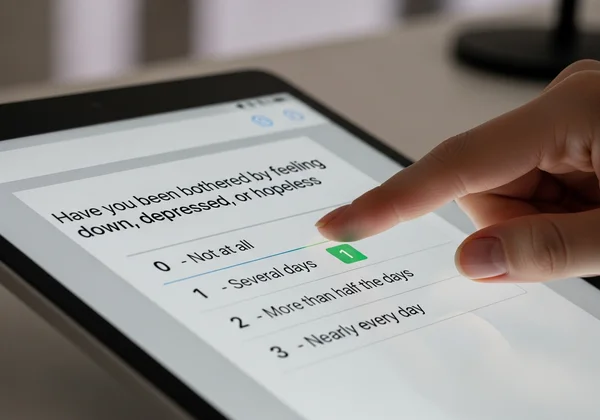
The BDI test questions cover a range of feelings and physical symptoms. You'll be asked about things like your mood, your sleep patterns, your appetite, and your interest in activities you usually enjoy. Each question has a set of four possible responses, ranging in intensity from 0 to 3. Simply select the one that resonates most with you. The structure is simple and intuitive, guiding you through the reflection process smoothly. You can take the free BDI test whenever you feel ready.
Interpreting Your BDI Test Scores & Meaning
Once you complete the assessment, you'll instantly receive a score. This number is a valuable piece of information, but it's important to understand what it represents and, just as importantly, what it doesn't.
BDI Score Ranges: What Do Mild, Moderate, or Severe Mean?
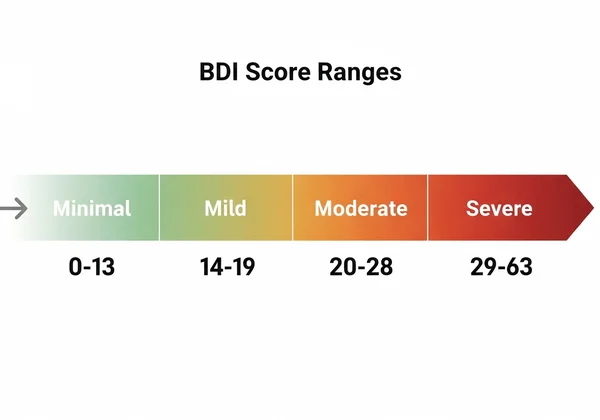
Your BDI score meaning is categorized into different levels to help you understand the severity of potential symptoms. While scoring systems can vary slightly, a common interpretation is:
- 0-13: Minimal depression
- 14-19: Mild depression
- 20-28: Moderate depression
- 29-63: Severe depression
These labels—BDI mild moderate severe—are not diagnoses. They are descriptors that help contextualize your score. A "moderate" score, for example, simply indicates that you are endorsing more significant symptoms than someone with a "minimal" score.
How Your BDI Score is Calculated
The BDI scoring is simple. Each of the 21 questions has response options rated on a scale from 0 to 3. Your total BDI score is the sum of the ratings from all 21 items. The highest possible score is 63. This straightforward calculation makes the BDI a transparent and easy-to-understand tool for both individuals and clinicians. Knowing how the score is derived can demystify the process and help you feel more in control of your self-assessment journey.
Beyond the Number: Deeper Insights from Your BDI Results
Your total score is a great starting point, but the true value lies in the patterns within your answers. Which questions did you score highest on? Are your challenges related more to physical symptoms like sleep, or cognitive ones like self-criticism? Understanding these nuances provides a richer picture of your experience. Some platforms, like our online BDI tool, offer optional AI-powered reports that can analyze these patterns for even deeper, personalized insights.
Your BDI Test Next Steps: Beyond Self-Assessment
Your score isn't the end, but the start of a new chapter. The most important part of the BDI process is deciding what to do with your bdi score.
Deciding When to Talk to a Mental Health Professional
If your score falls into the moderate or severe range, or if any score is causing you distress, it is strongly recommended that you speak with a doctor or mental health professional. Even if your score is mild, talking to a professional can be beneficial if you're struggling. Think of your BDI score as a tool to open a conversation. It provides a clear, objective starting point for discussing your feelings with someone who can help.

How to Discuss Your BDI Results with Your Doctor or Therapist
When you meet with a professional, you can share your score and even the specific answers that concern you. You can say something like, "I took a Beck Depression Inventory online and my score was a 25. I was particularly concerned about my answers related to sleep and concentration." This gives them concrete information to work with and shows that you are proactively engaged in your well-being. It transforms a vague feeling into a focused discussion, making the conversation more productive.
Exploring Support & Self-Care: A Depression Help Guide
Regardless of your score, there are always steps you can take to support your mental health. This is where the journey transitions from assessment to action, creating a proactive plan for well-being.
Overview of Therapy Options for Depression (CBT, DBT, etc.)
If you choose to seek professional help, there are many effective, evidence-based therapies. Cognitive Behavioral Therapy (CBT), for instance, helps you identify and change negative thought patterns—a perfect complement to the insights gained from the BDI. Other options include Dialectical Behavior Therapy (DBT), psychotherapy, and more. A professional can help determine the best fit for you.
Simple Self-Care Strategies to Support Your Well-being
Professional support is crucial, but so are daily self-care practices. Small, consistent actions can make a big difference. Consider incorporating activities like:
- Mindful Movement: Gentle walking, stretching, or yoga.
- Consistent Sleep: Aim for 7-9 hours per night.
- Nourishing Food: Pay attention to how different foods make you feel.
- Social Connection: Reach out to a friend or family member.
- Mindfulness: Spend a few minutes each day focusing on your breath.
The Value of AI-Powered Insights on Bditest.org
For those who want to dig even deeper into their self-assessment, the optional AI-driven analysis on our platform offers a unique advantage. This feature goes beyond the total score to analyze response patterns, highlight key areas of concern, and provide personalized insights that can enrich your self-understanding and enhance your conversations with a healthcare provider.
Empowering Your Mental Health Journey with the BDI Test
Your BDI journey is a personal and empowering one. By taking the time to understand your emotional health, you are making a profound investment in yourself. The BDI test is more than just a questionnaire; it’s a compass that can help you navigate your inner world with greater clarity and confidence. It provides a language to describe your feelings and a clear path toward seeking support.
Ready to take the first step? Begin your journey with a free, confidential BDI test today and unlock the insights you need to move forward.
Frequently Asked Questions About Your BDI Journey & Depression Insight
What is the BDI test primarily used for?
The BDI test is primarily used as a screening tool to measure the severity of depressive symptoms. It helps individuals gain self-insight and provides a standardized measure for clinicians to track progress during treatment. It is not a diagnostic tool.
What is considered a 'normal' or minimal BDI score?
A score in the range of 0-13 is typically considered to indicate minimal or no depression. However, "normal" is subjective, and any score that feels distressing to you is worth exploring further.
Can the BDI test provide a clinical diagnosis of depression?
No, absolutely not. This is the most important thing to remember. The BDI test is a self-assessment and screening tool. A formal diagnosis of depression can only be made by a qualified healthcare professional, such as a psychiatrist, psychologist, or primary care physician, after a comprehensive evaluation.
How quickly can I get my BDI test results online?
Instantly. After answering the final question on platforms like our website, your score is calculated and displayed immediately, along with an interpretation of what that score generally indicates.
What is the highest possible score on the BDI-II?
The highest possible score on the Beck Depression Inventory-II (BDI-II) is 63. This would occur if a person selected the most severe response (rated as 3) for all 21 questions.